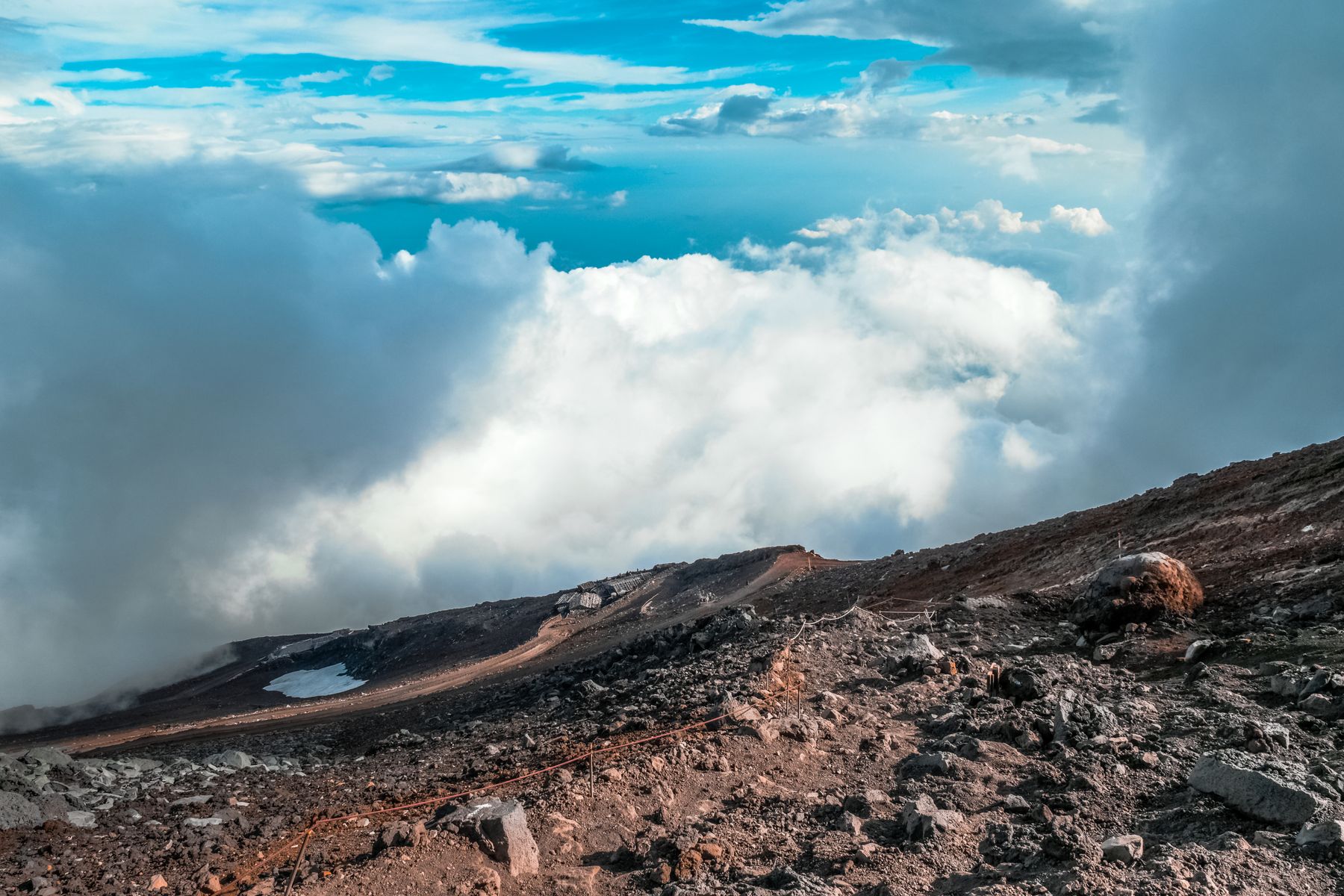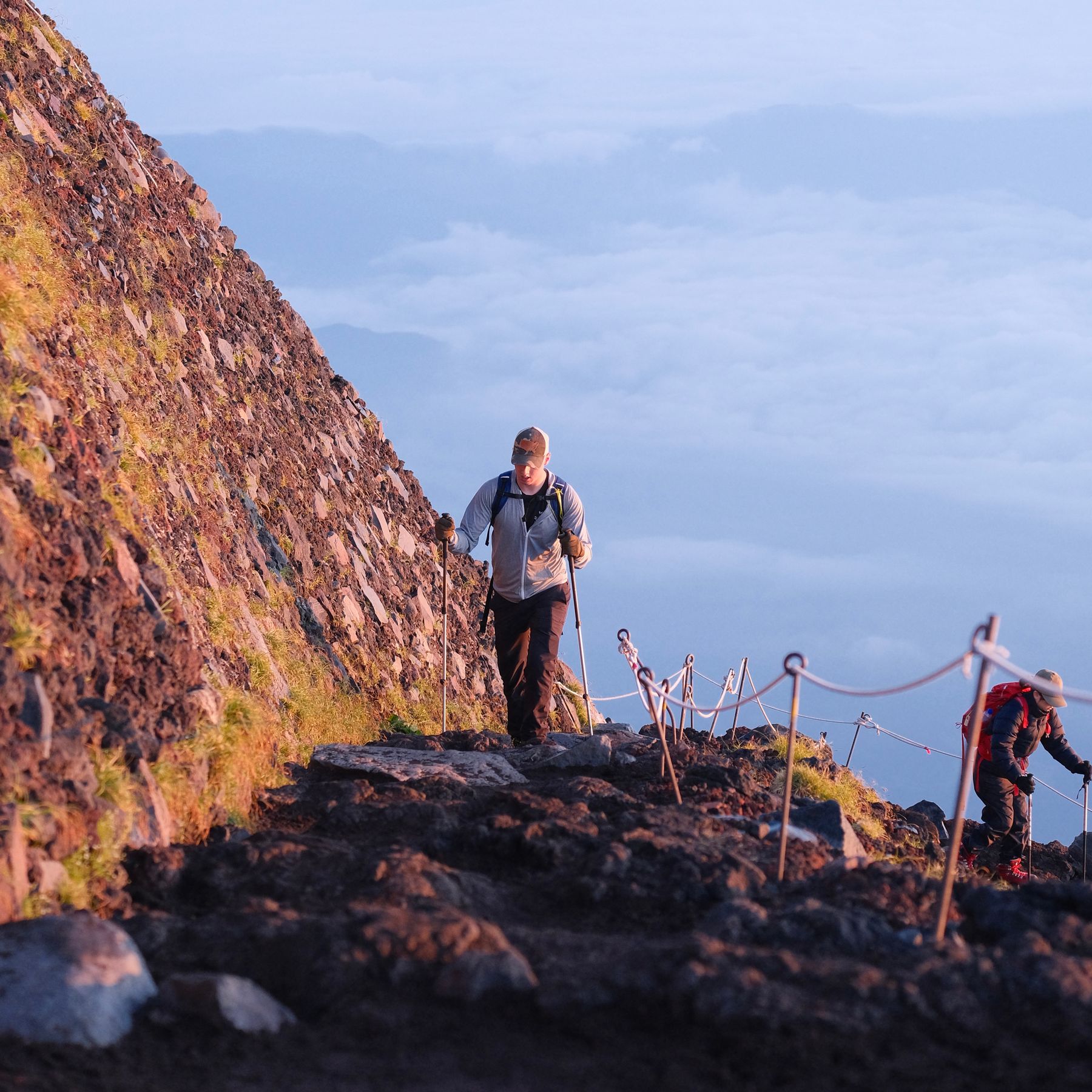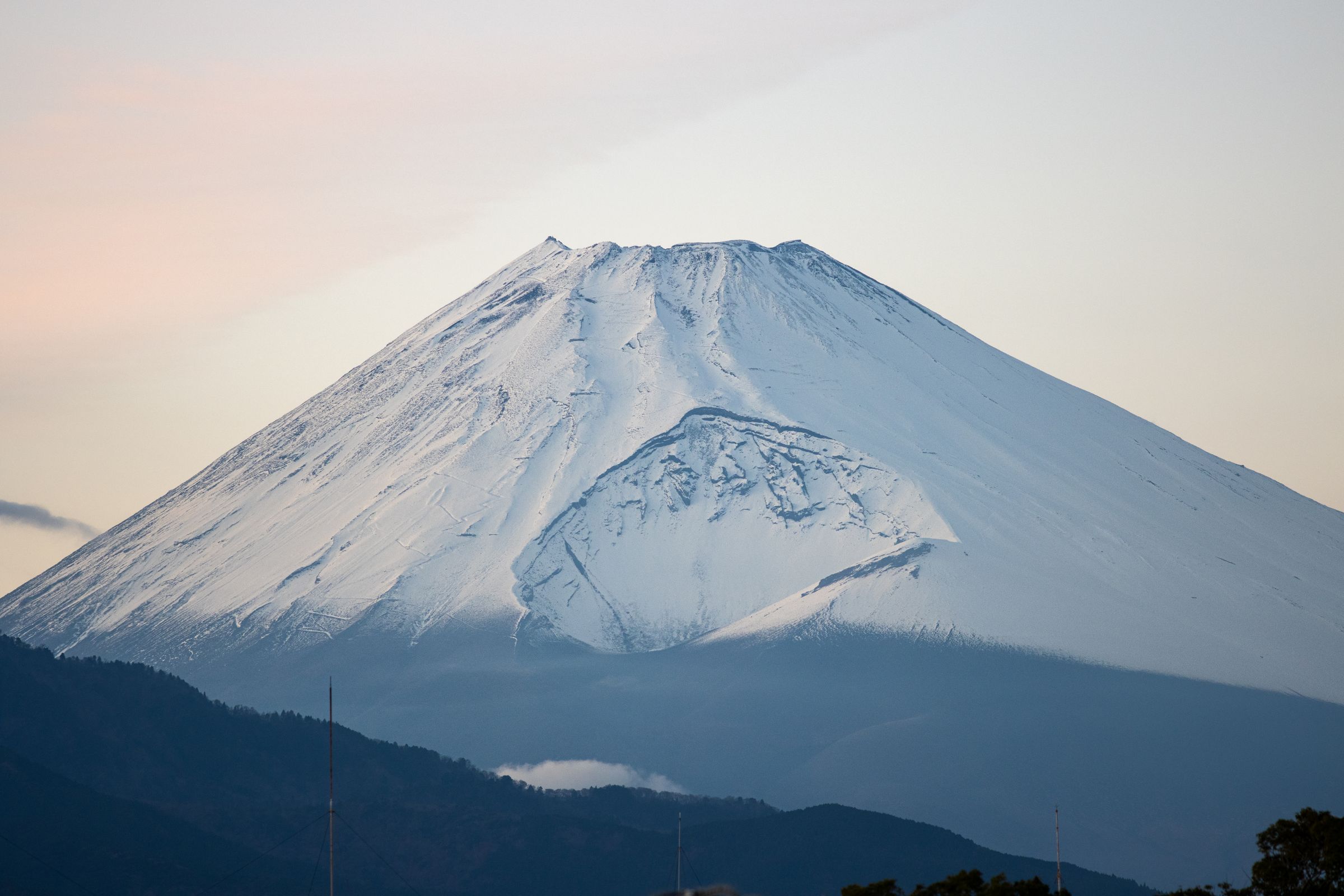
Three thousand seven hundred and seventy six metres, done the slow way. We leave the fifth station in the afternoon, sleep at the eighth, and walk the last hour in the dark so the crater arrives with the sun.
Months the summit route is open
Every trail open, every hut full, and a queue on the last hour before sunrise. We leave the fifth station earlier than most people do, and we sleep higher.
Two thousand three hundred metres, and everybody else is coming down. We walk up through the afternoon at a pace that feels too slow, because the people who suffer at three in the morning are the ones who felt strong at four in the afternoon. Dinner and a bunk at the eighth station.
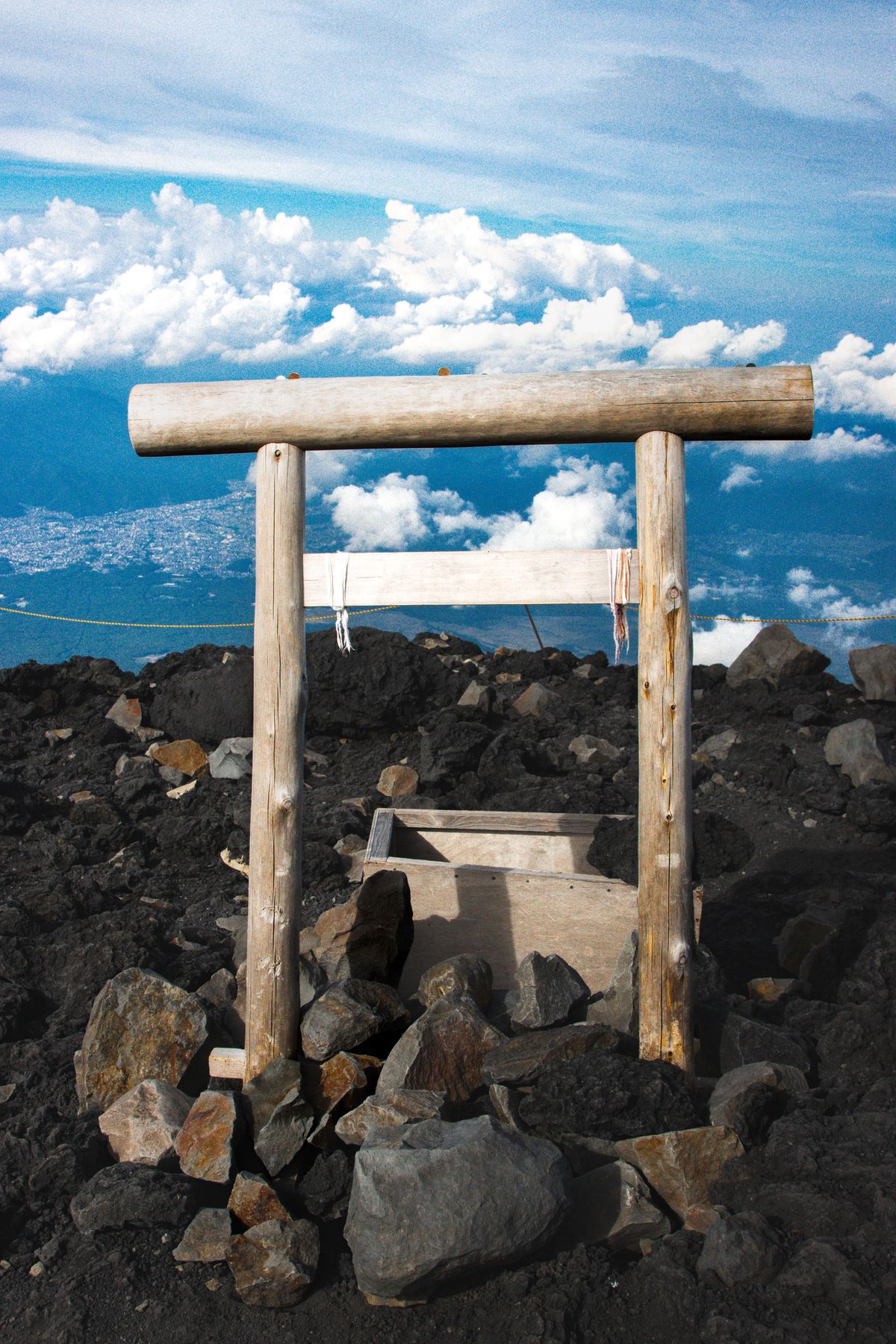
The last stretch is a torchlit queue on most nights, so we go before it forms. There is a small wooden torii on the rim and a crater the size of a village, and then we walk the whole thing round before we start down the Subashiri sand run.
Day one, afternoon
Day two, before dawn
Covered a guide to every six climbers, in English and Japanese.
Covered the hut at the eighth station, dinner and a bunk.
Covered Kawaguchiko station to the fifth station and back.
Covered helmet, headtorch, a shell if you need one, and your trail registration filed for you.
Not covered getting to Kawaguchiko, mountain insurance, and the trail fee you pay at the gate.
Bring boots you have already walked in. It is the one thing we can't lend you.
They have walked the Yoshida route in July crowds and in October when it is closed and empty, and they will tell you honestly which one you actually want.
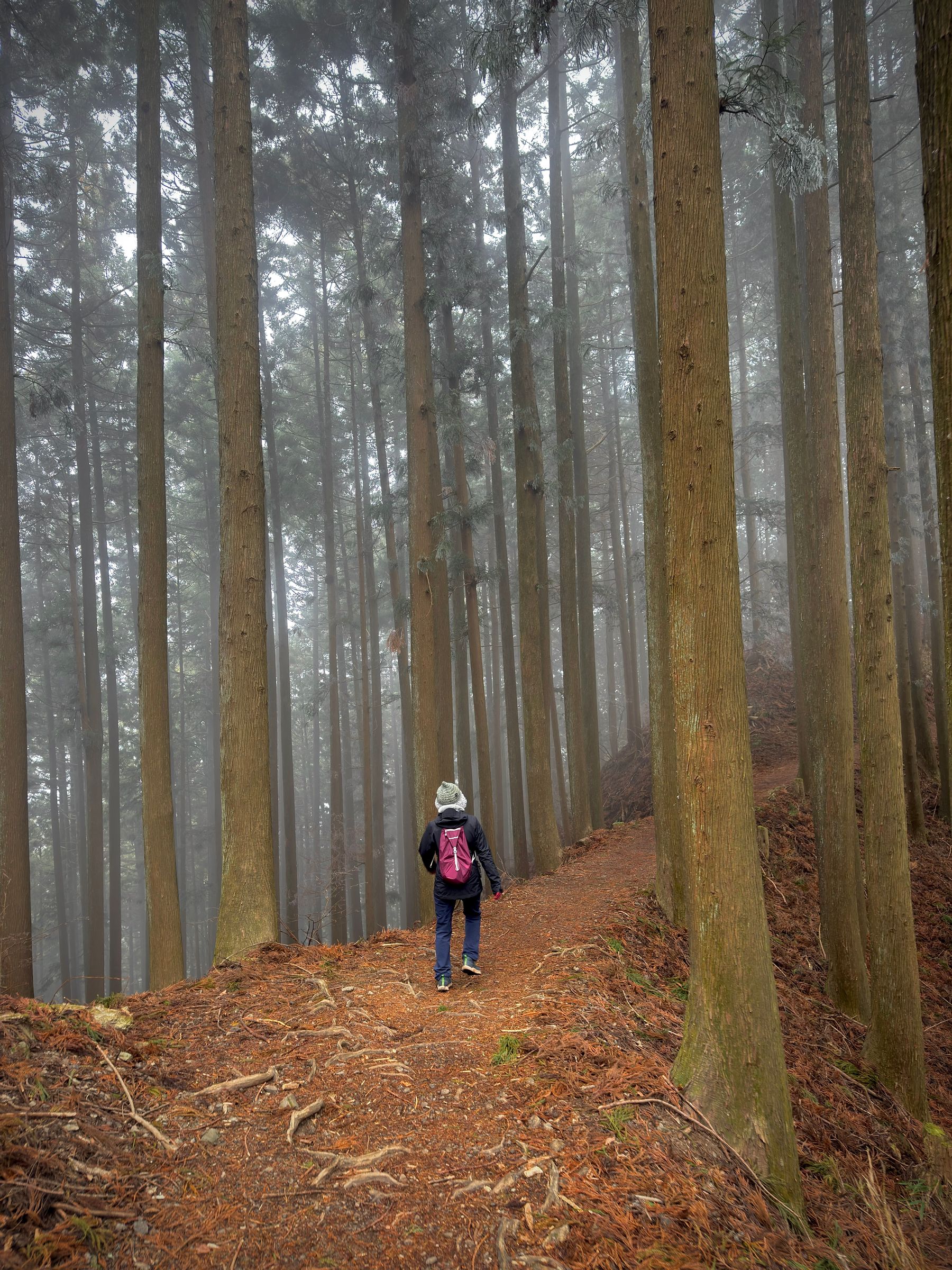
The cedar path below the first station, early morning.